When the Camera Met Buildings: A History of Architectural Photography

Updated: May 23
When the camera met the buildings

Photography was born in 1839 with the daguerreotype (yes, not 1986... back then we were still using VHS tapes and shoulder pads). It was invented by Louis Daguerre and allowed images to be recorded on metal plates. At first, it was extremely expensive and required extremely long exposures, making it impossible to photograph people in motion. But buildings, like many purists, never move. And so, almost by default, architectural photography became the first photographic genre. Ironically, it turned out to be the most efficient way to document heritage and urban transformations.
The camera then became a historical document with legs (well, without legs, but you get the idea):
Édouard Baldus (1813–1889) : commissioned by the French government to document the reconstruction of Paris under Baron Haussmann. His photographs of bridges, stations, and boulevards are now invaluable records.
Charles Marville (1813–1879) : He documented the streets of Paris before they were demolished to make way for the boulevards. Thanks to him, we know what the medieval city looked like before modernization. The beginning of street photography ? Perhaps, but without skaters or vintage filters.
Francis Frith (1822–1898) : He traveled to Egypt and the Middle East to photograph pyramids and ruins with an archaeological focus. Basically, the Indiana Jones of the camera.
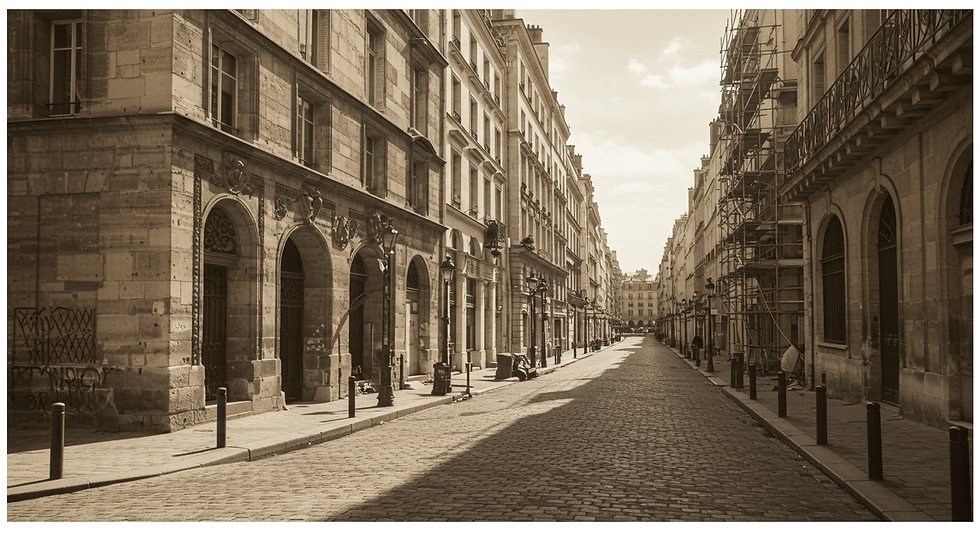

These photographers built the visual imagery of entire cities and civilizations.
While painting took centuries to align itself with architecture, photography did so from day one. In fact, it was architecture that legitimized photography as a serious form of representation, beyond portraiture.
The architects, who were anything but naive, quickly understood that the camera was a powerful tool for disseminating projects, showcasing urban transformations, and creating visual memories that transcended paper. As always: a shark's mind.
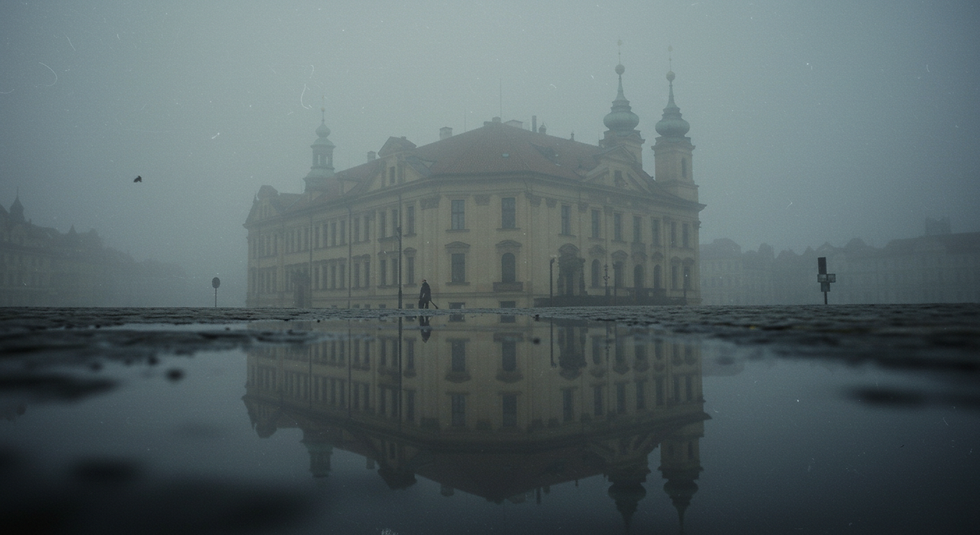
But of course, not everything could remain a "technical document." Josef Sudek , in Prague, introduced fog, reflections, and atmosphere, transforming architectural photography into visual poetry. It ceased to be a simple notarial record of bricks and mortar to become an aesthetic interpretation. Since then, architectural photography has existed halfway between documentation and art. It shows not only what a building looks like, but also how it feels to stand in front of it. And that's where light, angle, shadow, and even the inclusion of people come in, completely changing the narrative.
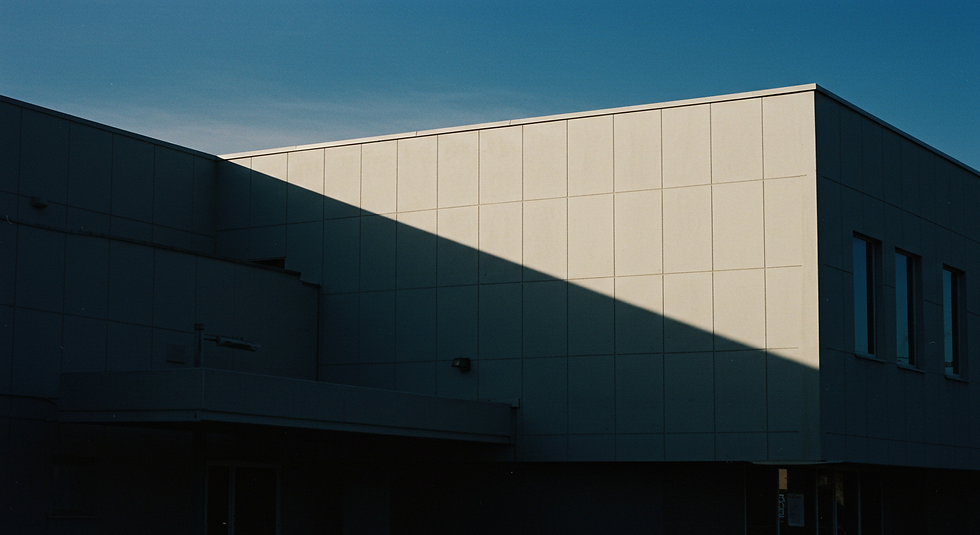
The Modern Movement ended up catapulting photography as an ideological weapon: clean lines, clear geometries, and compositions so abstract that they looked like Mondrian paintings, but with permission from Architectural Record magazine.
Today, gender is not just art, it is also a profitable business:
Architects and firms use it for competitions and branding.
Construction and real estate companies selling what still smells of fresh cement.
Museums and cultural institutions to preserve the memory of historic buildings.
Social media to fuel the attention economy, because without likes there's no glory.
Among contemporary photographers:
Iwan Baan (Netherlands , 1975) : He moves away from cliché. He's not interested in architecture as an object, but in the human stories within it. Basically, he portrays how it's used , not how it should be used .
Hélène Binet (Switzerland , 1959) : She's called the poet of architectural photography. Her black and white, dramatic lighting, and sculptural composition are the antithesis of the "minimalist luxury" real estate catalog.
Today, many architectural photographers prefer to work with natural light, like Zen monks, avoiding flashes or artificial light that "disrupts the architect's intentions."
If you want to go deeper, a must-read book is:
Ezra Stoller : Photographer : shows how Stoller turned photography into an essential tool for spreading modern architecture in the US. This book is almost mandatory if you want to understand how the myth of modernity was constructed with perfect angles.
An article on architectural photography that can help you learn more about the genre:
Photography and Architecture 1939 (Robert Elwall) : traces the relationship between photography and architecture before World War II. Spoiler alert: the camera was already doing more for architectural memory than any critic with a fine pen.
Today the most common uses are almost infinite:

Real estate marketing (the obvious but lethal one).
Branding for architects and firms.
Materials and construction industry.
Tourism and cultural promotion.
Architectural publishers and magazines.
Social media and the ubiquitous attention economy.
Criticism and the art market.
In the end, we can say it without fear: architecture and photography are soul mates . Since 1839, they have embraced and never let go. Photography has accompanied technological evolution, legitimized discourses, helped sell square meters, and, in the process, inspired art. Today, its techniques live on in renderings and visualizations before the first brick is even laid. Because, of course, who wants to wait until the building is built to start showing it off?
What do you think? Did the camera elevate the architecture, or did the architecture give meaning to the camera? Leave it in the comments; I'm interested in reading your struggles and disagreements.
And if this post made you see the photo (or the building) in a different light, share it with someone who loves both architecture and the click of a shutter.


Comments