Silent medicine: architecture and health

Biophilic Design

Today we conclude this series on silent medicine. Let's take a look back to understand why we got here. With the Industrial Revolution and the rise of the Modern Movement, architecture became an act of technological domination. Le Corbusier spoke of "the machine for living," and buildings became rational, hygienic... but cold objects. Nature was relegated. The goal was no longer to adapt to the climate, but to control it. This is how many believe architecture lost its sensorial, emotional, and symbolic relationship with nature.

But at the height of modern architecture, there was a Mexican architect who said: “My work is autobiographical, and if there is emotion in it, it is because that is how I feel about nature.” — Luis Barragán , Pritzker Prize winner 1980.


His work, even unwittingly, incorporated some of the principles we would later call Biophilic Design. He wasn't one for creating interior gardens, but his use of natural light was spectacular. An example of this is the Gilardi House , where light becomes a living element. He also used water as an emotional device: fountains and pools of water refreshed the environment and created spaces of tranquility.
Remember in another article when we talked about materials as a tool to reduce stress and anxiety? Well, Luis Barragán was a genius at that: he used wood, stone, and natural textures, mastering the transitions between interior and exterior with lattices and low walls that gradually allowed you to discover his gardens. Barragán created intimate, silent, and contemplative spaces where the user could retreat from the world.
What the hell is biophilic design?

Let's start by defining biophilia: literally, a love of life or affinity for the living. This term was popularized by biologist Edward O. Wilson in his book Biophilia , where he posited that we all have an innate tendency to seek connections with other living beings and with natural systems. He argued that this attraction was not cultural, but evolutionary. This is where environmental psychology and evolutionary biology intersect with architecture.
And then comes an architect with the mind of a shark (and also an environmental psychologist): Stephen R. Kellert, who found a way to apply this concept to the built environment, laying the groundwork for what we now know as Biophilic Design . Kellert pointed out that modern urban spaces have disconnected us from nature, generating stress, anxiety, and, consequently, a general loss of well-being.
In 1993, Kellert and Wilson published The Biophilia Hypothesis , which brought together studies on how contact with nature influences human well-being. Kellert argued that nature should be systematically integrated into the built environment not as decoration, but as a structural principle, and proposed a classification with three levels of integration:

1. Nature in Space
It refers to direct contact with nature or natural systems: visual and non-visual connection with nature, non-rhythmic sensory stimuli, thermal and air flow variability, presence of water, dynamic and diffuse light, and connection with natural systems.
2. Natural Analogues
Related to representations or abstractions of nature: biomorphic forms and patterns, material connection with nature, complexity and order.
3. Nature of Space
Describes spatial conditions inspired by nature: perspective, shelter, mystery, and controlled risk or danger.
The most successful biophilic spaces tend to combine several of these patterns for maximum impact.
In 2008, Kellert, Judith Heerwagen and Martin Mador published Biophilic Design: The Theory, Science and Practice of Bringing Buildings to Life , consolidating the concept within contemporary architecture.
Benefits of biophilic design
Lowers blood pressure and heart rate.
Improves air and sleep quality.
Regulates the interior temperature.
Reduces anxiety, stress and cognitive fatigue.
Increases concentration, creativity and satisfaction.
Promotes positive social behaviors.
Areas of application
Education: Schools with interior gardens and natural light increase learning retention. According to Environmental Psychology Review (2017), students with natural views were 20% more focused. Could that be? Those of us who studied in Mexico and had a view of the courtyard or garden were always in a daze... or was it just me? Leave your comments below.
Health: Hospitals with visual contact with nature reduce pain and stress and speed patient recovery. Ulrich, R. (1984). “View Through a Window May Influence Recovery from Surgery.”
Offices: Workers in biophilic spaces report 15% more well-being and 6% more productivity. Human Spaces Global Report on Biophilic Design in the Workplace (2015).
Housing: Integration of patios, organic materials, cross ventilation, and natural light. Curious how this sounds like the essence of traditional architecture… only now it has scientific backing.
Urban planning: The obvious, I'd say: parks, walkways, green corridors, green roofs, etc. In the 2010s, urban planner Timothy Beatley expanded the concept to include public policy and urban planning. In his book Biophilic Cities: Integrating Nature into Urban Design and Planning, he proposes that cities should not only contain green spaces, but that nature should be their central structure.
Cities such as Singapore, Melbourne, Oslo, and Wellington have adopted biophilic strategies: green roofs, biodiversity corridors, vertical parks, and urban reforestation systems.
Evolution and criticism
Today, we talk about an evolution from biophilic design to regenerative architecture, buildings that restore ecosystems, neuroarchitecture, and the psychology of space. The concept is no longer limited to "bringing nature in," but rather to making nature and architecture cooperate as a single system.
Like any trend, it also has its detractors: some accuse it of being a fad, others warn of the risk of “biophilic washing,” when the term is used without a real ecological commitment (very close to greenwashing).
Featured projects
Khoo Teck Puat Hospital – Singapore ( CPG Consultants ). Each room has a garden view; energy consumption was reduced by 20% and patient recovery was accelerated. Journal of Therapeutic Horticulture, vol. 24, 2014.

Bosco Verticale – Milan ( Stefano Boeri , 2014) 900 trees and 20,000 plants. Reduces urban noise and improves air quality. Boeri Studio, “The Vertical Forest: Tree-Filled Architecture for Sustainable Cities” (2015).

Amazon Spheres – Seattle ( NBBJ , 2018) Three domes with 40,000 plant species. Workplace wellness and urban biodiversity lab. Fast Company, “Inside Amazon's Spheres” (2018).

One Central Park – Sydney ( Jean Nouvel + Patrick Blanc , 2014) Living facades with mirrors that redirect sunlight. Green Walls in High-Rise Buildings, CTBUH Technical Paper (2015).

Changi Airport – Singapore ( WOHA Architects ). Considered the world’s most biophilic airport: waterfalls, gardens, and indoor trails. The Guardian, “Changi Airport: The Jungle Terminal Changing the Future of Travel” (2019).

Representatives and theorists
Edward O. Wilson (USA) – Biologist, author of Biophilia (1984) and The Diversity of Life (1992).
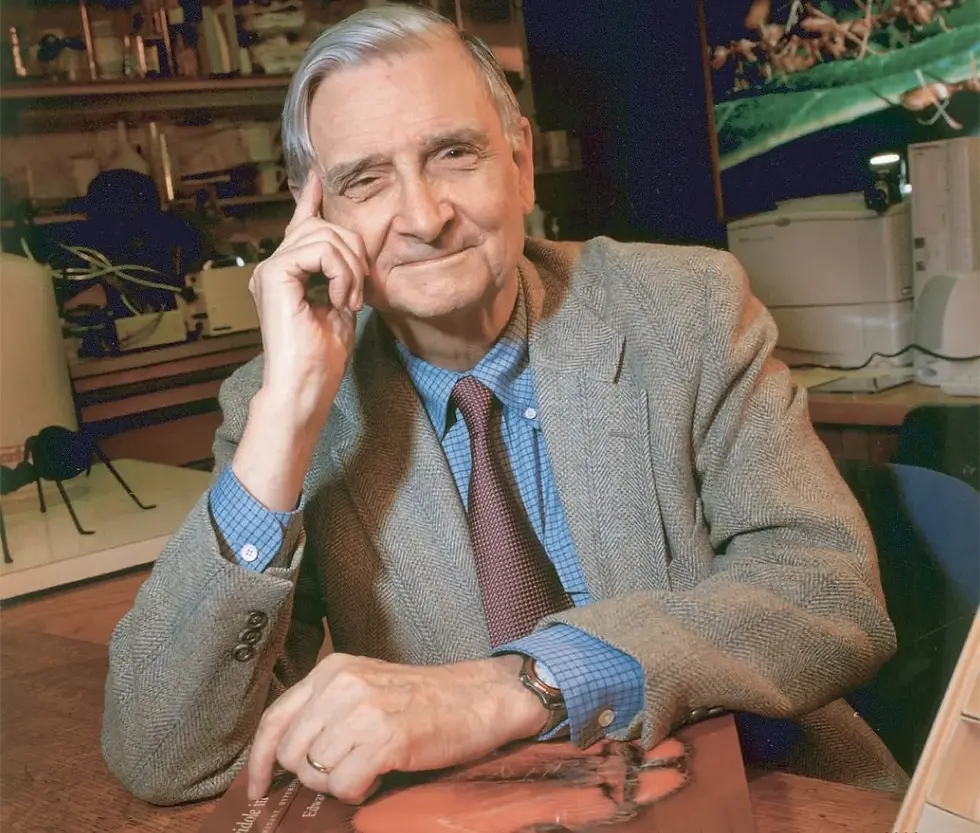
Stephen R. Kellert (USA) – Architect, theorist and popularizer of Biophilic Design.
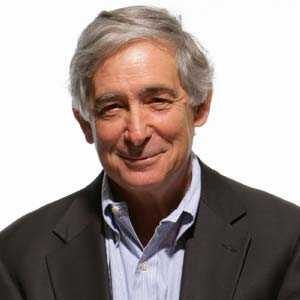
Timothy Beatley (USA) – Urbanist, author of Biophilic Cities: Integrating Nature into Urban Design and Planning (2011).



Comments