Self-construction: a consequence of a corrupt or broken system?

Let's start by talking about what led us to the decision to build on our own.
From my perspective, there are three main culprits:
The difficulty in accessing housing.
A centralized economic development.
Corruption, and here I would include real estate speculation.
Let's briefly develop each one to get a better idea of the context.
Data that supports it
According to ECLAC , by 2022, more than 100 million people in Latin America lived in informal housing conditions, that is, in irregular settlements, overcrowding, or precarious conditions.
According to CONAVI , Mexico's housing deficit will exceed 9 million units by 2023. UN-Habitat notes that in countries such as Mexico, Peru, and Colombia, more than 60% of the homes built in the last decade were self-built .
Uneven growth
Jobs are concentrated in major cities or metropolitan areas. As a result, these areas become denser without adequate planning. Services are overwhelmed , and housing costs rise due to the scarcity of supply.
In cities like Mexico City , regulations and water supply problems make it even more difficult to create formal housing. This forces workers to live increasingly far away, with commutes that can exceed five hours a day on public transportation.
Bureaucracy and corruption
Some non-governmental organizations maintain that the legal process for acquiring a formal home or a developed lot can take 5 to 10 years , due to procedures, validations, and titling.
The IDB (Inter-American Development Bank) has documented multiple cases of municipal corruption in regularization and permitting processes. According to UNAM , 70% of informal developments in Mexico arise because urban planning regulations fail to adapt to the real growth of cities.
Actors who profit from need
Some actors and organizations take advantage of legal loopholes. Among them:
Neighborhood leaders divide land into lots and sell possession rights without legal guarantees.
Pseudo-housing cooperatives , which promise access to land or housing, but only extort or speculate.
Local bosses or criminal groups control the territory and decide who can build or live there. As some journalists say, they create a social shield .
Consequences of self-construction
Next, we address the effects on quality of life , safety , and the urban environment. We'll begin with the social aspect and conclude with the architectural aspect.
Impacts on quality of life
Overcrowding : small houses where many people live together due to lack of resources to expand.
Lack of basic services (drinking water, sewage, electricity): unsanitary conditions are generated that increase gastrointestinal diseases and disrupt child development.
Urban and social isolation : housing far from work centers, without sidewalks, lighting, transportation, or public spaces or green areas.
Asset poverty : These homes lack property titles or market value, making it difficult to access loans for improvements. Progressive self-construction consumes resources without generating added value.
Psychological impact : constant uncertainty due to the risk of eviction or collapse, chronic stress, lack of privacy and comfort. The latter affects family relationships and mental health.
Security: Risks Beyond the Walls
Community insecurity and violence : lack of police presence, areas without public lighting, residual spaces that become hotbeds of crime.
Informal territorial control : In these settlements, criminal groups appropriate the territory and create a parallel state.
Lack of access for emergency units : ambulances, patrol cars, or firefighters cannot easily enter; evacuations and rescues are hampered.
Institutional invisibility : there are no police patrols, complaints are not addressed, and social and educational programs are not available.
How does it transform the city?
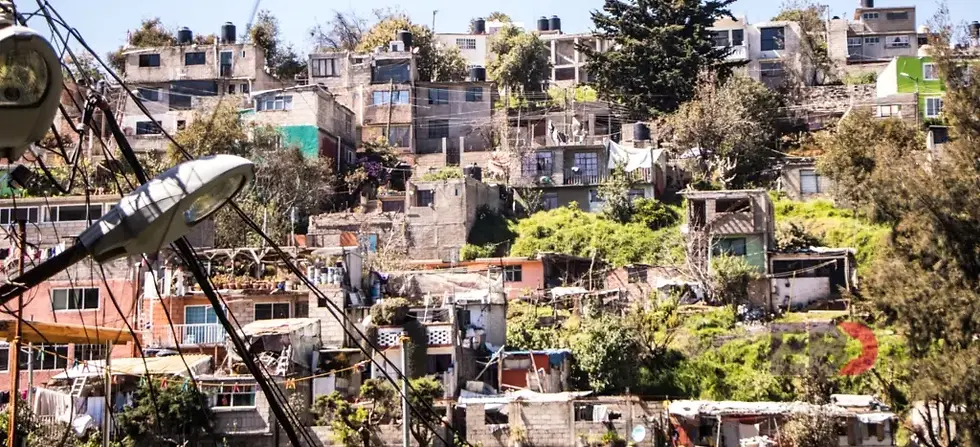
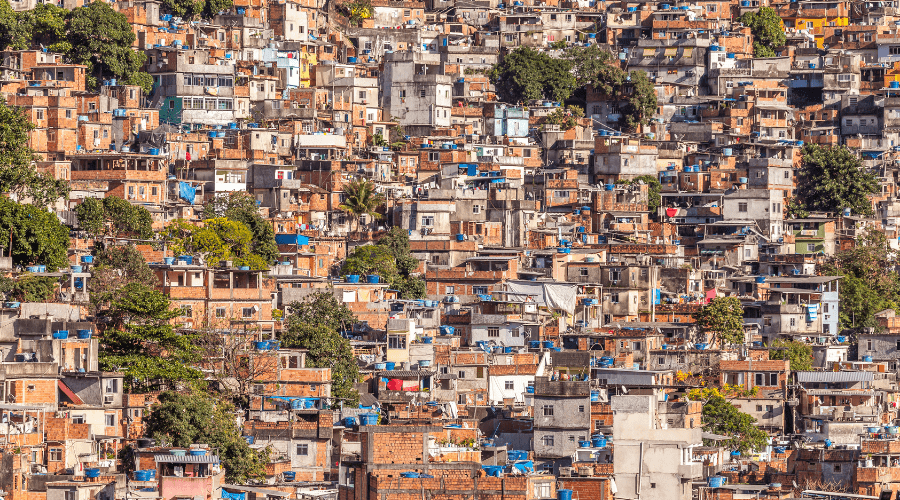
Many believe that self-construction only impacts individual homes. But that's not the case. Its cumulative effect transforms entire neighborhoods and cities .
Disorderly urban growth : it hinders mobility, access to public services and connectivity.
Infrastructure and services deficit : the city grows physically, but not functionally, which increases territorial inequality.
Environmental problems : Many invaded properties are located in ecological reserve or high-risk areas, such as ravines or flood plains. This increases the risk of disasters and contributes to environmental degradation.
Lack of facilities and public spaces : These settlements lack schools, health centers, parks, or markets. They often become commuter towns .
Social fragmentation and stigmatization : Informal neighborhoods are labeled as "invasions" or "red zones." Lacking public investment due to their legal status, the gap with the formal city deepens.


This is just the first part.
Next week I'll publish a follow-up article. For now, I want to invite you to view self-construction not only as a problem of poverty , but as a direct consequence of a system that has failed for decades.
I won't get into politics, but I do think we should be aware of how this phenomenon has shaped our cities. Being clear about this can help us analyze public policies in a more neutral way .
I would like to say “objective,” but we all have an ideology, shaped by the environment in which we grew up. Let’s just take these points as a starting point for our own analysis .


Comments