Silent medicine: architecture and health


A fascinating topic. The first records of the relationship between architecture, urban planning, and health emerged in the 19th century , with the expansion of industrial cities. Problems such as overcrowding, poor ventilation, and a lack of natural light were highlighted, linked to diseases like tuberculosis and cholera . Nurse Florence Nightingale championed the importance of natural ventilation in hospitals in the mid-1800s.

Around 1933 , the Paimio Sanatorium , designed by Alvar Aalto, was conceived to promote physical and mental recovery: natural light, cross ventilation, and soothing colors. Can we consider this one of the first examples of therapeutic architecture?
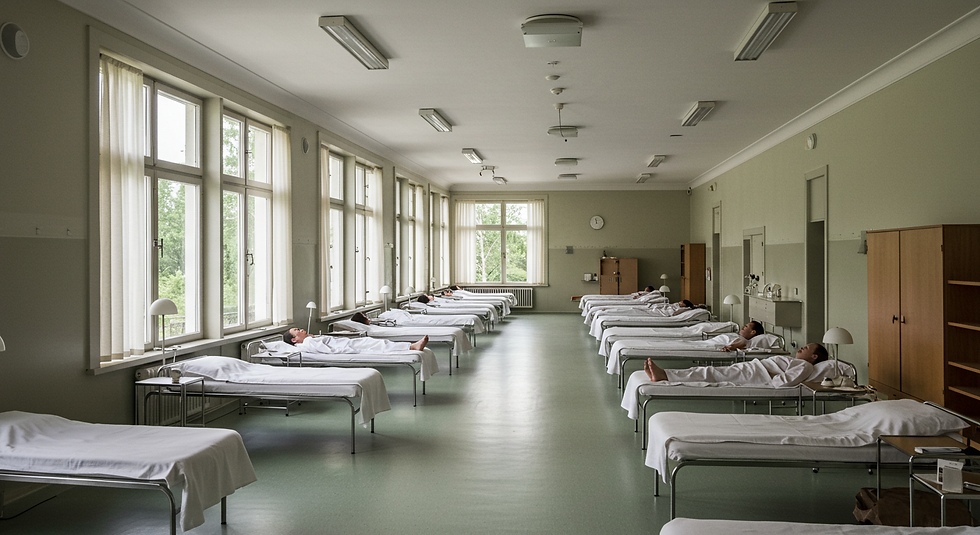
The first studies of environmental psychology and socio-architecture appeared in the 1950s and 1960s . This is where Humphry Osmond coined the terms sociopetal and sociofugal , in an investigation into how the arrangement of furniture and spaces encouraged or inhibited social interaction in psychiatric hospitals.

In the 1970s and 1980s , Roger Ulrich published the study "View through a window may influence recovery from surgery," where he found that patients with a view of trees recovered faster and used less painkillers than those with a view of walls. This was one of the first quantifiable data on the effect of the environment on health.

Stephen and Rachel Kaplan developed Attention Restoration Theory (ART) with The Experience of Nature , proving that exposure to nature restores focus and reduces mental fatigue.
In the 1990s, the first systematic studies in hospitals and clinics emerged that linked architectural design with patient recovery, stress reduction, and staff productivity. At this stage, the concept of Evidence-Based Design (EBD) emerged: designing hospitals based on scientific evidence and not solely on aesthetics.
At the same time, Clare Cooper Marcus and Marni Barnes published Healing Gardens , systematizing the role of therapeutic gardens .
With the arrival of 2000 , neuroscience, psychology and architecture were integrated, giving rise to neuroarchitecture .
Biophilic Design , pioneered by Edward O. Wilson and Stephen Kellert, demonstrates that integrating nature into built spaces reduces cortisol , improves productivity and strengthens well-being.
More recently, studies in urban planning and public health (Engemann et al., 2019 – PNAS ) show that growing up in neighborhoods with access to nature reduces the risk of mental illness throughout life.
This brief timeline helps us understand how the relationship between architecture and health has evolved.
Healing Gardens: the beginning of this series
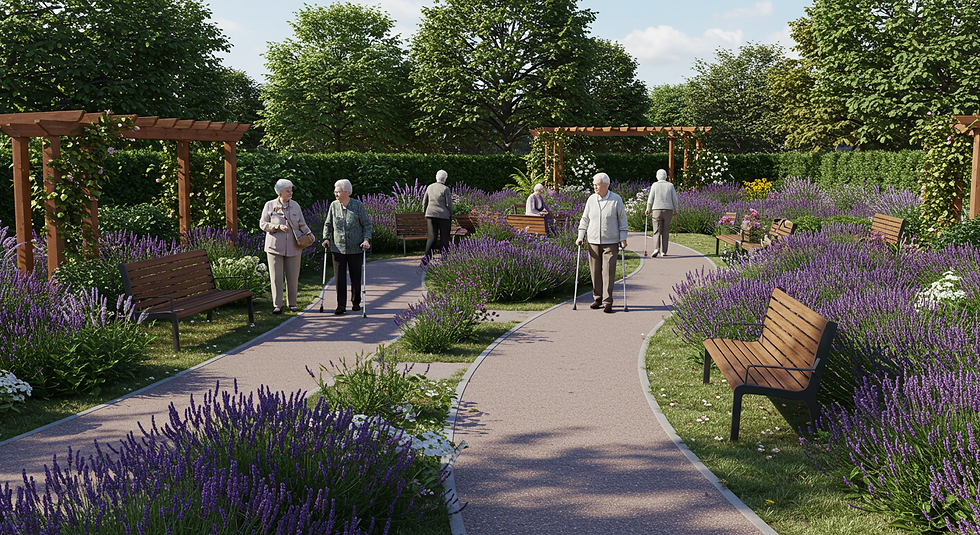
Deciding where to start is not easy, but we believe a good starting point is the 90s with the concept of Healing Gardens .
These are green spaces specifically designed to promote a person's physical, emotional, and spiritual recovery .
There is a definition of architecture that says: “Architecture is the art and technique of designing and building spaces that satisfy both the physical, spiritual and emotional needs of human beings.”
This idea is inspired by Vitruvius , who established that architecture must comply with three principles:
Firmitas (firmness, physical stability)
Utilitas (utility, response to practical needs)
Venustas (beauty, aesthetic and spiritual satisfaction).
Healing Gardens are different from a common park because they have a therapeutic purpose : to help reduce stress, alleviate symptoms, and improve quality of life. Although many studies focus on hospitalized patients (primarily older adults and people with chronic or mental illnesses), they can also be adapted for residential design .
In these gardens, elements such as floor textures, sounds and aromas are especially useful for people suffering from anxiety, stress or depression .
Main benefits
Physicists
They stimulate movement.
They improve the immune system.
They promote motor rehabilitation.
Mental
They reduce stress and anxiety.
They help in therapies against depression and cognitive disorders.
They increase concentration and memory through natural stimuli.
Social
They encourage interaction between family members and caregivers.
Key elements in the design of Healing Gardens
Diverse vegetation.
Water and sound sources.
Accessible walkers.
Spaces for contemplation.
Sensory stimuli (aromas, textures, sounds).
Cultural and symbolic connection.
Security and privacy.
Types of gardens applicable to housing
Therapeutic gardens
Sensory gardens
Urban gardens
Vertical gardens and green roofs
Gardens of contemplation
This is the first part of our series . If you'd like us to delve deeper into any of these gardens, leave a comment and visit our social media for examples and design details. And if you're interested, share so this doesn't just stay between friends.
And if you have something to say, say it without fear.
I leave you some studies that can complement the information.


Comments