Silent medicine: architecture and health


In this second part, we'll discuss a hot topic: neuroarchitecture , the science of design. It emerged in the late 20th century as a result of the fusion of neuroscience, cognitive psychology, and architecture. Its goal is to understand how spaces modify brain and emotional processes .

In 2003, it was formalized with the creation of the Academy of Neuroscience for Architecture (ANFA) in California, the first institution dedicated to uniting neuroscience and architecture. It was founded byJohn Paul Eberhard , along with another driving force in the discipline, Frederick H. Gage , neuroscientist who studied how environments affect brain plasticity.

Eberhard , who graduated as an architect in 1951, worked in urban planning and the development of applied design technologies. In the 1960s, he directed the Institute of Applied Technology ; in the 1970s, he founded the SUNY at Buffalo School of Architecture and Planning . From the 1980s, he became interested in how architecture could influence the human mind. The question that started it all was: What happens in the brain when we inhabit a space?
Some of his most notable publications are:
Architecture and the Brain: A New Knowledge Base from Neuroscience (2007): seeks to build bridges between architecture and neuroscience, showing how discoveries about the brain can guide architects in creating spaces that positively influence human emotions, health, and behavior. Its main themes are:
Perception and emotion in spaces : environments impact memory, mood, and well-being.
Cognitive processes and orientation : analyzes how we use spatial cues to orient ourselves ( wayfinding ).
Physiological response to the environment : Factors such as natural light, acoustics, proportion and color can reduce stress and anxiety.
Evidence-based design : proposes that architects adopt a similar approach to medicine, designing based on scientific evidence and not just aesthetic intuition.
Brain Landscape: The Coexistence of Neuroscience and Architecture : Explores how the environment influences perception, memory, and emotion.
Current references in neuroarchitecture

Eve Edelstein Architect, neuroscientist, and anthropologist. She studied clinical neuroscience and applied it to the design of hospitals, offices, and cities. She was one of the first to translate neuroscience findings into architectural design, not just in theory but in real projects.
His main contributions:
Clinical application in architecture : He investigated how lighting, heat, sound, and acoustics affect the nervous system and circadian rhythm. He focused on hospitals, designing environments that reduce medical errors and promote recovery.
Design + Neuroscience Methodology : use of EEG and virtual reality to measure brain reaction in different spaces.
Work and learning environments : studied how architecture can improve attention, memory, and concentration in offices and schools.
Connection with urban planning : he considered the city as a neurological laboratory where noise, density and vegetation impact mental health.
His most notable work includes:
Research in hospital settings: designing operating rooms and intensive care units with acoustics and lighting designed to reduce stress among medical staff.
Using virtual reality in architecture to simulate spaces and measure brain response in real time.
Promoting neuroarchitecture as a formal discipline, linking universities and architectural firms.

Sarah Robinson Architect and writer who explores the phenomenological and human dimensions of neuroarchitecture, connecting philosophy, psychology, neuroscience, and architecture.
His contributions:
Multisensory architecture : argues that perception is not only through sight, but through all the senses, taking up ideas from Merleau-Ponty.
Critique of reductionism : questions attempts to create design “recipes” from the brain, emphasizing the importance of culture, memory, and emotions.
Humanizing Design : Analyzes how spaces nurture emotional, spiritual, and social life, with an emphasis on housing and everyday environments.
Featured works:
Mind in Architecture: Neuroscience, Embodiment, and the Future of Design : brings together essays by neuroscientists, architects, and philosophers on how design influences thought, emotion, and creativity.
Nest: The Art of Living by Nature : reflects on human shelters and their connection to nature, relating biophilic design to the need for belonging and security.
Featured projects related to neuroarchitecture
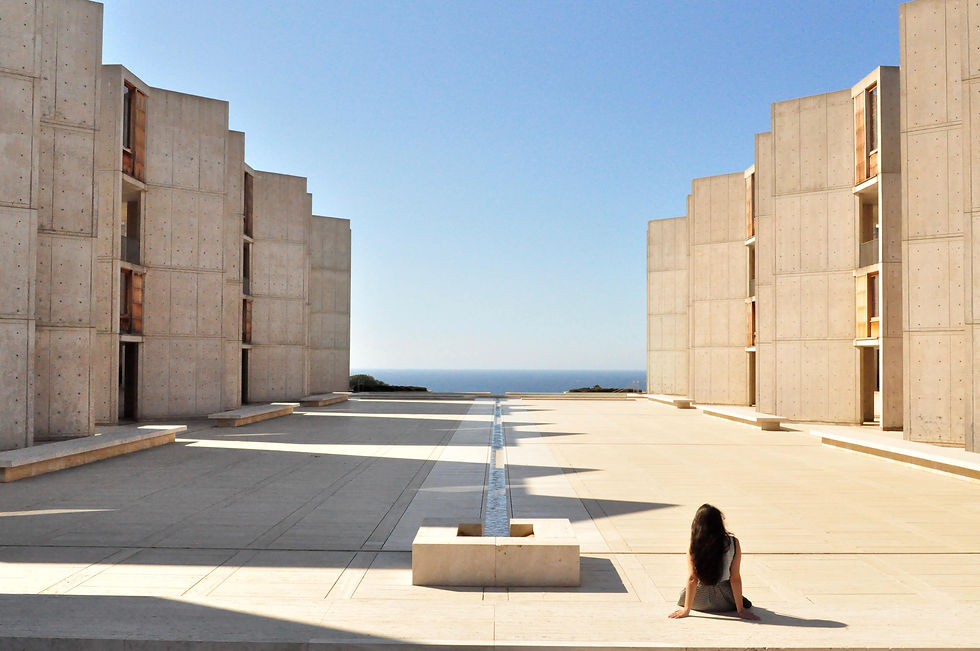
Salk Institute (1965, Louis Kahn, La Jolla, California). Designed to stimulate scientific creativity
Philadelphia Neuroscience Research Center (2010, Ballinger Architects ). It integrated laboratories with open spaces and natural views.

Maggie's Hospital Centres (1996–present, United Kingdom). Cancer patient centers focused on reducing anxiety through design.

Walden 7 (1975, Barcelona, Ricardo Bofill). A community habitat experiment that promotes social interaction.
Neuroarchitecture has expanded from healthcare to areas such as education, work, housing, and even urban planning.
Health benefits
Mental : reduction of anxiety, stress and depression.
Physical : improving post-surgical recovery and stimulating movement in rehabilitation processes.
Featured Academic Articles
Neuroarchitecture: How the Perception of Our Surroundings Impacts the Brain : analyzes how the environment influences emotions, memory, and orientation.
Bridging the Gap between Neuroarchitecture, Artificial Intelligence, and Sustainability : studies how neuroarchitecture can be integrated with AI and sustainability to promote well-being.
Biophilic Design, Neuroarchitecture and Therapeutic Home Environments : proposes that neuroarchitecture and biophilic design are key to therapeutic homes.
Buildings, Beauty and the Brain: A Neuroscience of Architectural Experience : explores the relationship between architectural beauty, form and brain response.
Conclusion
Neuroarchitecture is not a fad. It confirms the definition of architecture as "the art of addressing humankind's physical and spiritual needs." This bridge between science and design allows us to better understand the human being, showing that the environment is not neutral: it can make us sick, but it can also heal us.


Comments