What the f@#$% is the concept?

Surely many of us who decided to study architecture had no idea what the heck the famous "concept" was. That word that, at first, seemed so complicated to us and that we were unable to define or grasp.
Well, today could be your lucky day and you'll understand it differently... or we could still be the same, unable to explain it. But I'll do my best.
If we Google what "concept" is, we'll likely find that it's an abstract or concrete representation of the architect's intention. I'd put it more simply: a guide for making many decisions.
But how does it work? That's where we all get stuck. That's why we need to go back a step in the design process. Yes, let's go back to investigating analog buildings, but with our eyes wide open and paying attention when answering these questions:
What similarities are there in the environment (economic, environmental and social)?
In housing or service projects, we must be aware of the environment. Not only of other buildings—which are also important—but also of the economic, environmental, and social conditions.
Building a house in Ecatepec is not the same as building a house in Roma or Santa Catarina: all three present very different complexities.

Who is it for?
In the commercial or service sector, we must analyze what type of users the project is aimed at and what kind of people we want to attract to our work.
What is the personality of the users?
In residential projects, it's key to pay attention to the users' personalities. Spoiler alert: reading some clinical psychology books could help you better understand your clients.
Solving these three things can help us define objectives (the concept) and improve our architectural program.
Ultimately, we agree with Google's definition, but now we know where it comes from and how it helps us make sense of how we solve each function.
Can the concept be literal?
Some architects use objects, natural forms, or animals as formal or functional metaphors. Santiago Calatrava, for example, has been inspired by birds in flight or animal skeletons.
But how valid would it be to take a ladybug as a concept and, literally, in a 3D model, see it? Or an elephant's head with its trunk stretched toward the sky?
Is it correct to take these forms so literally?
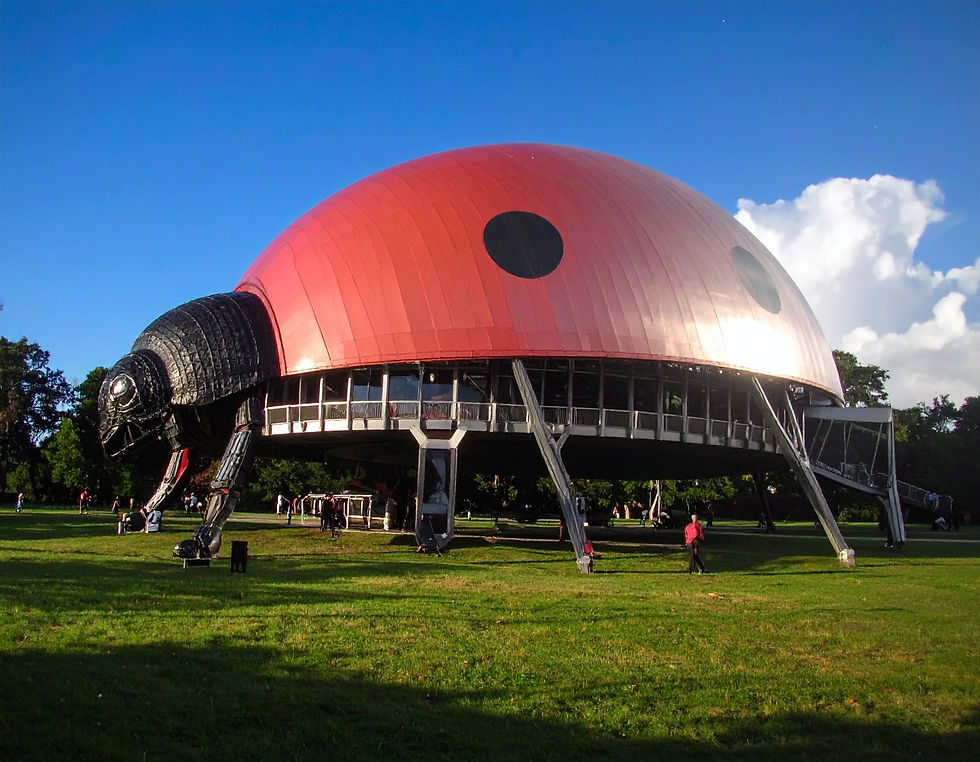
Personally, I think the concept works best when it's abstract, like "luminosity," "fluidity," or "dynamism." Although, to be honest, Calatrava's work, even with its literal meaning, is spectacular and extremely luminous.
Conclusion
The concept is the representation of the architect's objective, derived from the analysis of:
The environment (economic, environmental and social).
The type of users to whom the work or project is addressed.
The user's personality.
It can be abstract or concrete, depending on the designer's intention and language.
Share so this doesn't stay between friends.
And if you have something to say, say it without fear.


Comments