When housing became a business: the history of real estate speculation

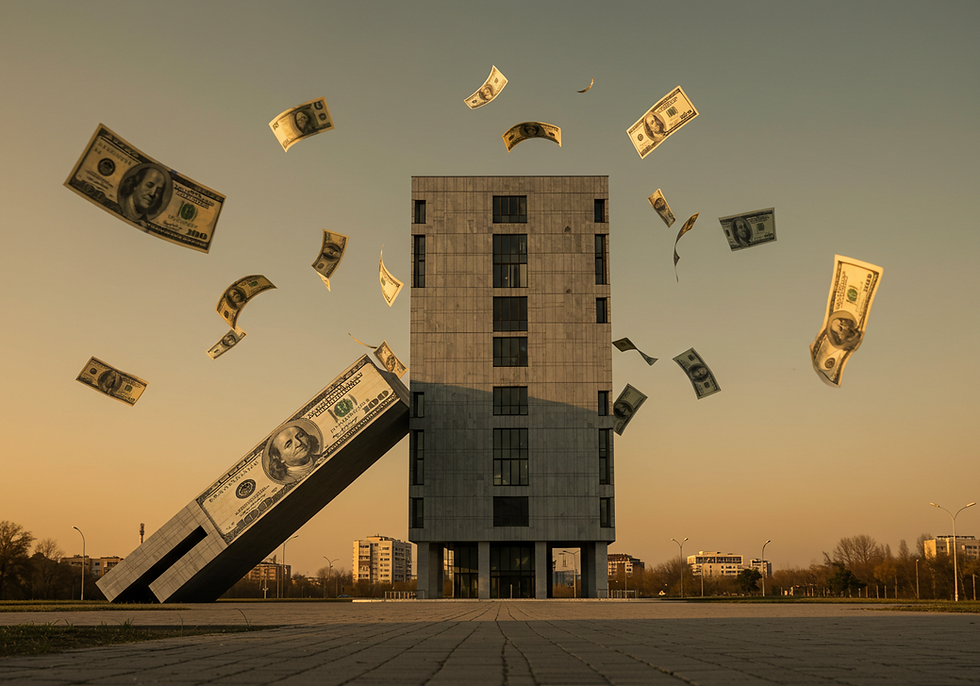
What is real estate speculation? And why should it make you a little angry?
It is an economic practice in which land, housing, or buildings are bought, sold, or retained not for the purpose of living in or using them, but rather to obtain a future profit from an increase in their value.
It's not about meeting housing needs, but rather betting that prices will rise thanks to external factors (urban growth, public works, gentrification, legal changes, tourism, etc.). Of course, we all know that in reality, there are always three factors: public works, legal changes, and gentrification . In all three, the government is the protagonist, using public resources to generate added value.
Highlights of real estate speculation:
Advance property purchases : This could be considered insider trading or the use of privileged information. For example, prior knowledge of government investments in certain areas of the city—urban improvements, new transportation lines, or economic developments—long before they are announced. Does anyone believe there isn't collusion with the authorities? Hard to imagine.
Timeline (as simplified as possible):
1980s : The idea emerged that "housing is not for living in, but for capitalizing." Urban land became a luxury commodity.
1990s : Mortgage lending soared, and housing was built on the outskirts (many now abandoned). It was a great business for banks and developers, but a disaster for cities and services.
2010 : The Airbnb dream arrives, sold as a “collaborative economy” but soon turned into massive speculation and gentrification.
2020 - today : accelerated gentrification, impossible rents, and the possibility of home ownership has become a utopia.
Housing: investment or right?
The dominant logic of recent decades has been to view housing as a financial asset , something purchased not to live in, but to resell or rent out at a higher price. In this view, the right to housing is subordinated to economic returns: the roof becomes a piece of property, not a home. Airbnb and gentrification are clear expressions of this approach: housing is transformed into a product of speculation.
But housing is recognized in Article 25 of the Universal Declaration of Human Rights and in the Mexican Constitution (Article 4) as a right. This means that every person must have access to a decent, safe, and affordable place to live. This implies that the State must guarantee public access policies, regulate the market, and, in essence, prevent abuses.
Here the value is not the square meter, but community life, stability and housing security.
The dilemma is not technical, it is political: do we want cities to live in or cities to gamble in?
Impacts on the city:
Economic : Housing inflates like a bubble, creating false “profits” until it bursts (remember the 2008 crisis?).
Social : displacement of inhabitants, loss of community, neighborhoods without identity because everything is temporary.

Corruption or just a coincidence?
Speculation doesn't just affect buildings; it also hangs on public investment. Does this sound familiar to you about insider trading ? With advance purchases, the profits are much higher, but that wouldn't be possible without the complicity of those who decide where and how urban investments are made.
The government improves public spaces (parks, streets, transportation), and speculators inflate prices, turning public spending into private profit.
Speculation rarely occurs alone: it requires "flexible" governments, express permits, and tailored land-use changes (does Clara Brugada's " letter of good wishes " ring a bell?). In short: real-estate corruption disguised as progress .
Cases of real estate speculation in Mexico:
Mexico City : The infamous real estate cartel in Benito Juárez (BJ for "the blues" ), a network of officials and construction companies that operated illegal permits in exchange for kickbacks. The consequence: buildings collapsed in the earthquakes of September 19, 2017.
Airbnb and Mexico City : an alliance to position the city as a "digital destination" while rents rise and families are displaced. Then they did us the favor of passing a law that allows them to rent for "only" half a year. A big step forward against gentrification, right?
Edomex, Diamante Forest (Jilotzingo) : a megaproject to deforest 200,000 hectares of oak trees and build 20,000 homes. It was authorized by Eruviel Ávila just before leaving office.
Edomex, Cerro Mesa Ahumada : During Arturo Montiel's administration, state authorities and ejidatarios colluded to cede ecological zones in Tequixquiac, Apaxco and Huehuetoca to companies seeking to develop key lands for water recharge.
Sinaloa and Jalisco : cases of speculation linked to money laundering and narco-gentrification .
Veracruz (Javier Duarte) : Diversion of almost one billion pesos through shell companies for the purchase of real estate.
Campeche (Alejandro Moreno) : acquiring land at ridiculously low prices and then “donating” it to his mother.
Corrupt real estate speculation is a widespread phenomenon in the country. The methods vary: ecocide, bribery, money laundering, or the triangulation of public assets. The common denominator: the alliance between developers and authorities .

This is the first installment on the subject.
Do you want to continue reading more about this?
Is there any angle you'd like us to develop further?
Leave it in the comments and visit our social media. There you'll find more topics and can suggest new ones.
If you liked it, share it so this doesn't just stay between friends.


Comments